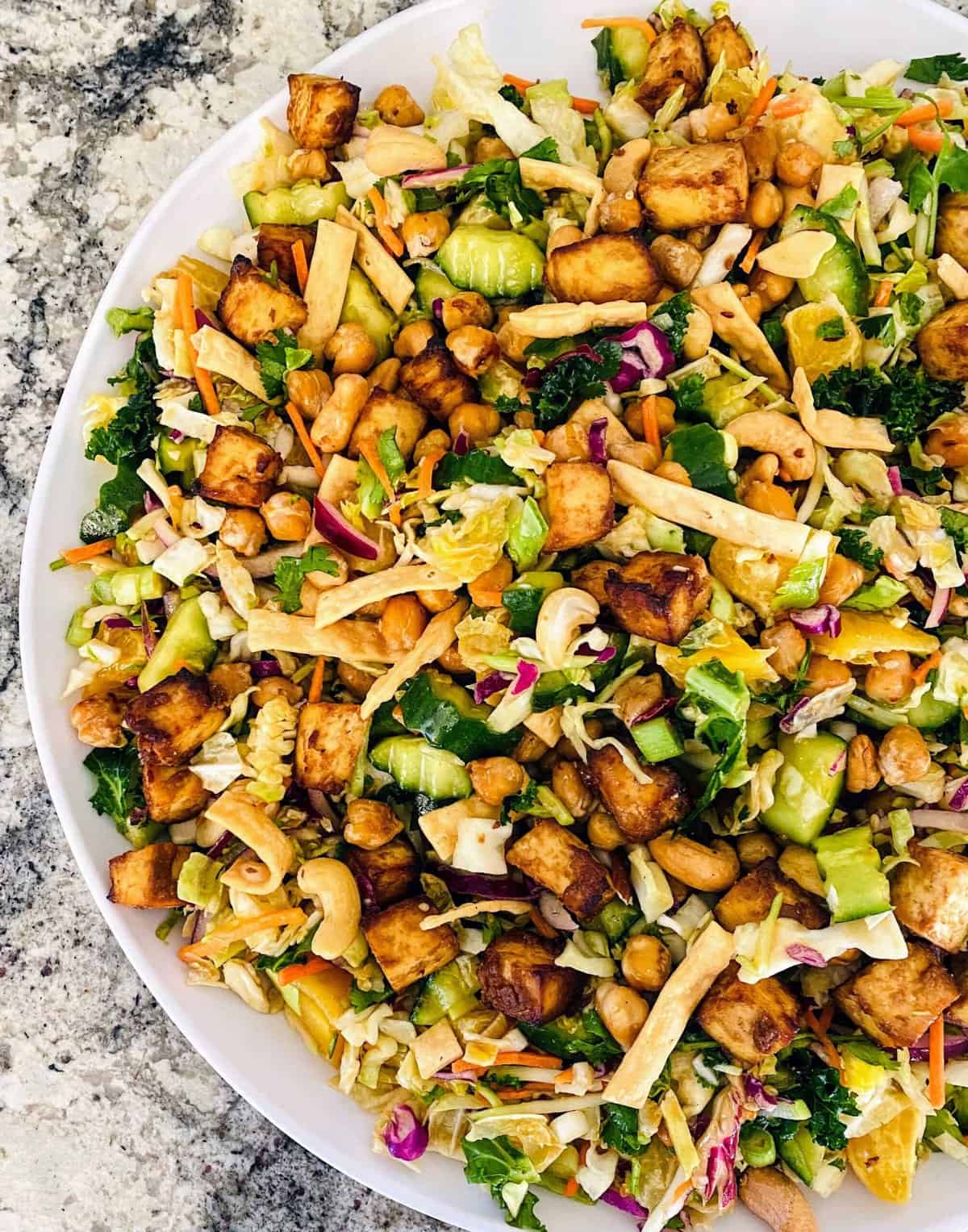
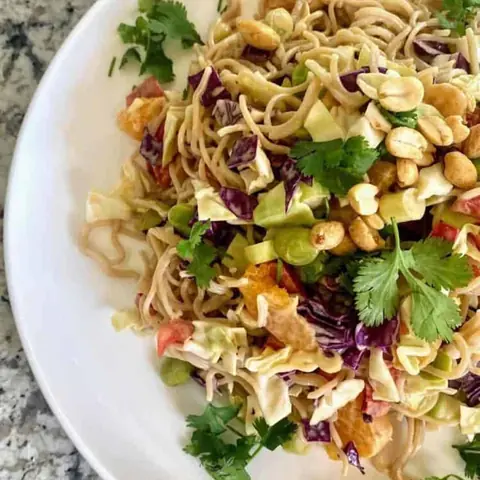
This vegan Asian salad recipe combines spicy and sweet with an incredible savory crunch. Layered raw vegetables, kung pao tofu, crunchy Asian chickpeas, and cashews, topped with air-fried wonton strips, will bring you back for seconds.
As many of you know, I love Asian food! Vegan Asian salad is a twist on a salad I recently devoured at one of my favorite Asian restaurants. I never thought of adding chickpeas to an Asian salad recipe, but the chickpeas add an incredible crunch. And the addition of the crunchy cabbage, roasted cashews, and a tangy vegan Asian salad makes this one of my new favorite salad recipes. This vegan Asian salad recipe is a definite winner, and I suggest trying this recipe.
One of the things I love about salads with cabbage is dressing it in advance. Not only does dressing the salad beforehand help the flavors enhance, but it's also a great-tasting salad the next day. Another one of my favorite aspects of this Asian chickpea salad is the air-fried crispy wontons.
So, what makes a great salad? The combination of textures, flavors, and nutritional benefits. But remember the taste. Salad doesn't have to be boring; Asian chickpeas salad can be a meal in itself.
Vegan Asian Salad Ingredients
Raw Ingredients
Savoy Cabbage: Savoy cabbage is a green, leafy vegetable that grows in loose, spherical heads made of crinkly, lacy leaves. It is classified as a cruciferous vegetable, meaning it is a member of the botanical family Brassicaceae, along with veggies such as cauliflower, broccoli, Brussels sprouts, and bok choy.
Red Cabbage: Red cabbage brings deep purple color and a sturdy crunch that holds up well after the salad is dressed, so leftovers still taste great the next day.
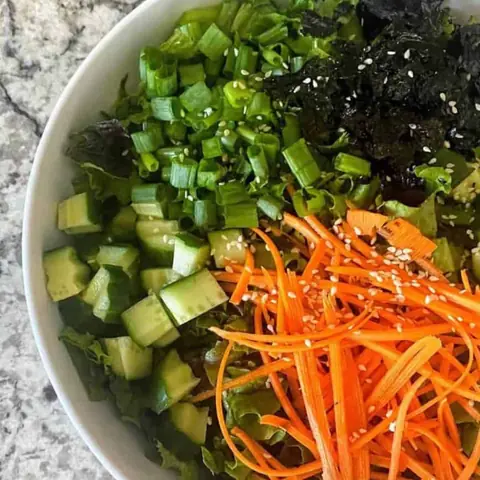
Cucumbers: I like English cucumbers because they contain less water and they keep the salad from getting soggy.
Carrot: I shred the carrots to make them easier to eat and keep the texture of the salad consistent.
Scallions: (Green onions) The white bottom section flavor resembles an onion, especially a white onion, though it is less intense and sweeter. Although it's the most potent part of the scallion, even served raw, as a garnish or ingredient in a salad, it is generally mild enough for most palates. The green part is distinctively oniony but with an additional fresh, grassy flavor.
Red Onion: Red onions are subtly sweet and mild enough to eat raw. The vivid magenta color of their skin makes a great addition to salads and salsas. If the flavor is too strong when raw, try soaking them in cold water before using.
Mandarin Oranges: Mandarin oranges have a vanilla and spicy component in their flavor profile. They also have a strong citrus aroma that is a fresh and pleasant smell. The fruit's nutty, woody, and floral aromas are more subtle than the fruit's citrus aroma.
Fresh Ginger: Ginger has a spicy flavor and an invigorating aroma. It produces a warming and fiery taste that gives an unmistakable and comforting kick.
Cilantro: Cilantro is said to have a fresh, citrusy, and/or soapy taste, depending on who you ask, and is also called Chinese parsley. On the other hand, its seeds are often referred to as coriander, a nutty- and spicy-tasting spice.
Air-fried Wonton Strips: It is easy to make oil-free Wonton strips by cutting wonton wrappers or egg roll wrappers in the air fryer.
Cashews: Roasted Asian cashews (recipe below) are seasoned with Asian flavors and roasted.
Asian Roasted Chickpeas: These chickpeas(recipe below)are seasoned with Asian flavors and roasted.
Sesame Seeds: Sesame seeds are used as a garnish.
Vegan Asian Salad Ingredient Substitutions
Choose any type or combination of cabbages.
Persian cucumbers are similar to English cucumbers. Or if you use regular cucumbers, remove the seeds before chopping.
Parsnips are an excellent substitute for carrots in recipes.
Spring onions work well as a replacement for scallions.
Yellow or white onions replace red onions. Or, try pickled red onions for a tangy pickled onion flavor.
Use canned mandarin oranges, tangerines, or any oranges.
Substitute ¼ teaspoon of ground ginger for every 1 tablespoon of grated ginger. This works as a substitute in fried rice or stir-fry recipes. Some sources recommend galangal as a substitute for fresh ginger root in the same plant family.
Substitute cilantro with other herbs such as parsley, Thai basil, or dill. Lemon and lime are also good substitutes in a pinch as they mimic the bright flavor of cilantro.
If you avoid soy products but want tofu, try chickpea tofu instead of traditional extra-firm tofu.
Use premade wonton strips, but check to make sure they are not fried if you avoid eating oils.
Add salted cashews instead of making Asian roasted cashews.
Instead of Asian roasted chickpeas, roast chickpeas without seasonings, or add them without roasting them.
Kung Pao Marinade
Soy Sauce: Soy sauce provides an umami flavor to the tofu marinade.
Vegetables Broth: Vegetable broth thins the marinade.
Rice Vinegar: Rice vinegar is sweet and supplies the acidity to the marinade.
Chili Paste: Chili paste is a thick, spicy sauce made from ground chili peppers, vinegar, salt, and other seasonings. It is used as a condiment or ingredient in many Asian dishes, such as stir-fries, curries, and marinades.
Maple Syrup: Maple syrup gives the marinade a naturally sweet flavor.
Ginger: Ginger gives the marinade a tangy and fresh taste.
Garlic: I prefer using fresh garlic cloves for the best flavor.
Cornstarch: The cornstarch thickens the sauce while it heats in the pan.
How to Make Vegan Asian Salad
Begin by preparing the cooked ingredients. Since this Asian chickpea salad recipe combines cooked and raw foods, preparing the cooked ingredients leaves time to chop the raw ingredients.
Air-Fried Wonton Wrappers (Oil-Free)
Drain the chickpeas, reserve the fluid (aquafaba), and set aside.
Using the aquafaba reserved from the can of chickpeas, brush the front and backsides of each wonton wrapper to moisten.
Then, cut the vegan wonton wrappers into ½ inch thick strips with a pizza cutter.
If air frying, cook in batches by placing the strips in a single layer in the air fryer basket.
Air fry at 350° for 4-5 minutes, until golden brown and bubbly.
Repeat with remaining strips until finished.
Place strips on a baking sheet lined with a silicone baking mat or parchment paper.
Bake for 10 minutes, flipping the strips over halfway through baking.
Asian Chickpeas and Cashews
In a bowl, combine the drained chickpea and the cashews. Add soy and miso mixture, and toss using your hands or a spoon.
Prepare a second baking sheet with parchment paper or a silicone baking mat.
Now, pour contents onto the baking sheet and sprinkle with sesame seeds
Roast for 20 minutes in a 400-degree oven.
Rotate the chickpeas and cashews halfway through roasting using a spatula.
Remove from the oven and allow to cool.
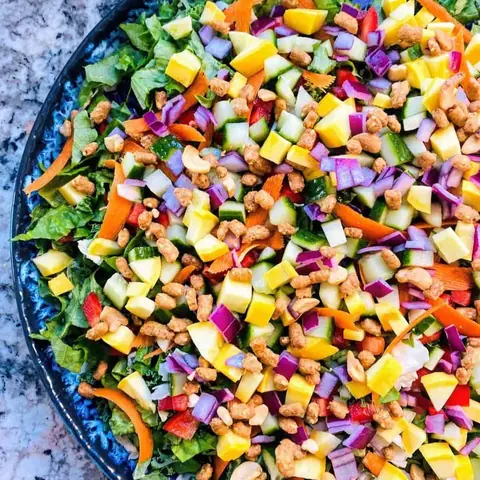
In the meantime, prepare the raw vegetables and mandarin oranges. Since I love chopped salads, I chopped the cabbages and everything into bite-sized pieces.
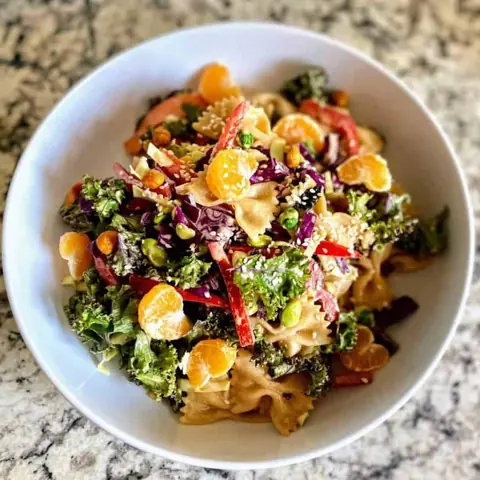
Next, toss all the raw ingredients together and place them in individual bowls or on a large platter. Then, add the Crispy Kung Pao Tofu (optional), Asian chickpeas, cashews, and top with air-fried wontons.
Of course, vegan Asian salad isn't complete without the vegan Asian salad dressing recipe.
Dressing Ingredients
Garlic: I prefer fresh garlic cloves in recipes when available.
Fresh Ginger Root: Fresh ginger has a more profound flavor.
Rice Vinegar: Rice vinegar is a type of vinegar made from fermented rice. It has a mild, slightly sweet flavor. It's a staple ingredient in many Asian dishes, including pickled vegetables, sushi rice, salad dressings, and slaws.
Soy Sauce: The taste of soy sauce is predominated by saltiness, followed by moderate umami, sweet taste, and, finally, slight bitterness, which is hard to perceive due to the masking effect of other tastes, the overall flavor of soy sauce results from the balance and interaction among different taste components.
Maple Syrup: Real maple syrup has a clean, complex maple flavor with hints of caramel, vanilla, and prune. It is a natural form of sugar that is unrefined.
Sriracha: The exact flavor and consistency of sriracha vary according to the brand, and you may find that Western varieties are a touch milder. It is generally spicy with a tangy, sweet flavor, pungent garlic notes, and a consistency similar to ketchup.
Water: The water in the dressing acts as an emulsifier without using any oil.
Dressing Ingredient Substitutions
Garlic flakes, also called dehydrated (or dried) minced garlic, use ½ teaspoon of garlic flakes in place of each clove. Granulated garlic: Use ¼ teaspoon of granulated garlic in place of each clove. Garlic powder: Use ⅛ teaspoon of garlic powder in place of each clove.
For fresh ginger root = ground ginger. Here's the substitution ratio: substitute ¼ teaspoon of ground ginger for every 1 tablespoon of grated ginger.
Champagne vinegar or apple cider vinegar are substitutes for rice vinegar.
Tamari or liquid aminos are gluten-free options for soy sauce. Or use low-sodium soy sauce for those who follow a low-sodium diet.
Date syrup or agave replaces maple syrup.
Any hot sauce or red pepper flakes are excellent substitutes for Sriracha.
When using Sriracha, remember to begin with a minimal amount, blend and taste before adding more.
I like spicy, but only some share my excitement about spicy foods. My taste buds and yours may differ when considering spice preference.
So tread lightly and start with a ¼-1/2 teaspoon first, taste, and repeat.
And, whatever you do, try not to fight over the leftover Asian chickpea salad if you have any!
Tips
When using any spicy ingredient, such as Sriracha, always add small amounts and taste before using the amount indicated in the recipe. Everyone has different tastes when it comes to spicy foods.
Do not add the air-fried wontons, cashews, or chickpeas until right before serving to maintain their crunchiness.
Keep the cooked ingredients separate from the raw ingredients until it is time to serve the salad.
If you want to add tofu, but don't want the soy, try chickpea tofu. Or skip the tofu altogether.
I suggest marinating the tofu overnight for the best flavor.
Vegan Asian Salad FAQs
What is in a vegan Asian salad?
This one layers savoy and red cabbage, cucumber, carrot, scallions, red onion, mandarin oranges, fresh ginger and cilantro, then tops it with crispy kung pao tofu, roasted Asian chickpeas and cashews, air-fried wonton strips and a soy ginger dressing with a little Sriracha.
How do you make a vegan Chinese chicken salad?
Use crispy kung pao tofu in place of the chicken. With the cabbage, mandarin oranges, crunchy wonton strips and sweet and tangy dressing, this salad has the same flavors you expect from a Chinese chicken salad. For soy-free, use chickpea tofu or skip the tofu.
Can you make Asian salad ahead of time?
Yes. Cabbage salads are great dressed in advance, and this one still tastes good the next day. Keep the wonton strips, cashews and chickpeas separate and add them right before serving so they stay crunchy.
This vegan Asian salad combines spicy and sweet with a savory crunch: layered raw vegetables, kung pao tofu, crunchy Asian chickpeas and cashews, topped with air-fried wonton strips.
according to the directions. Then, choose to air-fry or bake the tofu. I air-fried mine for a crispier exterior.
Tofu can be made ahead of time and rewarmed or served cold once cooked.
Air-fried Wontons
Drain the chickpeas, reserve the fluid (aquafaba), and set aside.
Using the aquafaba reserved from the can of chickpeas, brush the front and backsides of each wonton wrapper to moisten.
Then, cut the vegan wonton wrappers into 1/2-inch thick strips with a pizza cutter.
If air frying, cook in batches by placing the strips in a single layer in the air fryer basket.
Air fry at 350° for 4-5 minutes, until golden brown and bubbly.
Repeat with remaining strips until finished.
Place strips on a baking sheet lined with a silicone baking mat or parchment paper.
Bake for 10 minutes, flipping the strips over halfway through baking.
Asian Chickpeas and Cashews
In a bowl, combine the drained chickpea and the cashews.
Whisk the soy/miso mixture together,
Add soy/miso mixture, and toss using your hands or a spoon.
Prepare a second baking sheet with parchment paper or a silicone baking mat.
Now, pour contents onto the baking sheet and sprinkle with sesame seeds
Roast for 20 minutes in a 400-degree oven.
Rotate the chickpeas and cashews halfway through roasting using a spatula.
Remove from the oven and allow to cool.
Vegan Asian Salad Dressing
Combine all ingredients in a high-speed blender.
Blend until smooth.
Store in the refrigerator.
Toss the salad with the dressing (may be done ahead of time)
Serve and add chopped cashews.
Kathy's notes
When using any spicy ingredient, such as Sriracha, always add small amounts and taste before using the amount indicated in the recipe. Everyone has different tastes when it comes to spicy foods.
Do not add the air-fried wontons, cashews, or chickpeas until right before serving to maintain their crunchiness.
Keep the cooked ingredients separate from the raw ingredients until it is time to serve the salad.
If you want to add tofu, but don't want the soy, try chickpea tofu. Or skip the tofu altogether.
I suggest marinating the tofu overnight for the best flavor.
How did it turn out?
Your stars help other home cooks find Kathy's recipes.
Tap a star:
Vegan Asian Salad by Kathy Carmichael, https://www.kathysvegankitchen.com/vegan-asian-salad/
Hello! I’m excited to make this salad over the weekend. Question - can I prep everything the day before if I keep the raw and cooked ingredients as well as the dressing separate? Or will the cooked ingredients lose their crunch? Thanks!
KCKathy CarmichaelRecipe author
Hi Kori, you can prep everything beforehand; however, keep it all separate and put it together right before you plan to serve it.
DJDanielle Johnson
Looks soooo yummy!
KCKathy CarmichaelRecipe author
Hi Danielle, let me know if you try it. I would love your opinion.


4 comments
Hello! I’m excited to make this salad over the weekend. Question - can I prep everything the day before if I keep the raw and cooked ingredients as well as the dressing separate? Or will the cooked ingredients lose their crunch? Thanks!
Hi Kori, you can prep everything beforehand; however, keep it all separate and put it together right before you plan to serve it.
Looks soooo yummy!
Hi Danielle, let me know if you try it. I would love your opinion.