


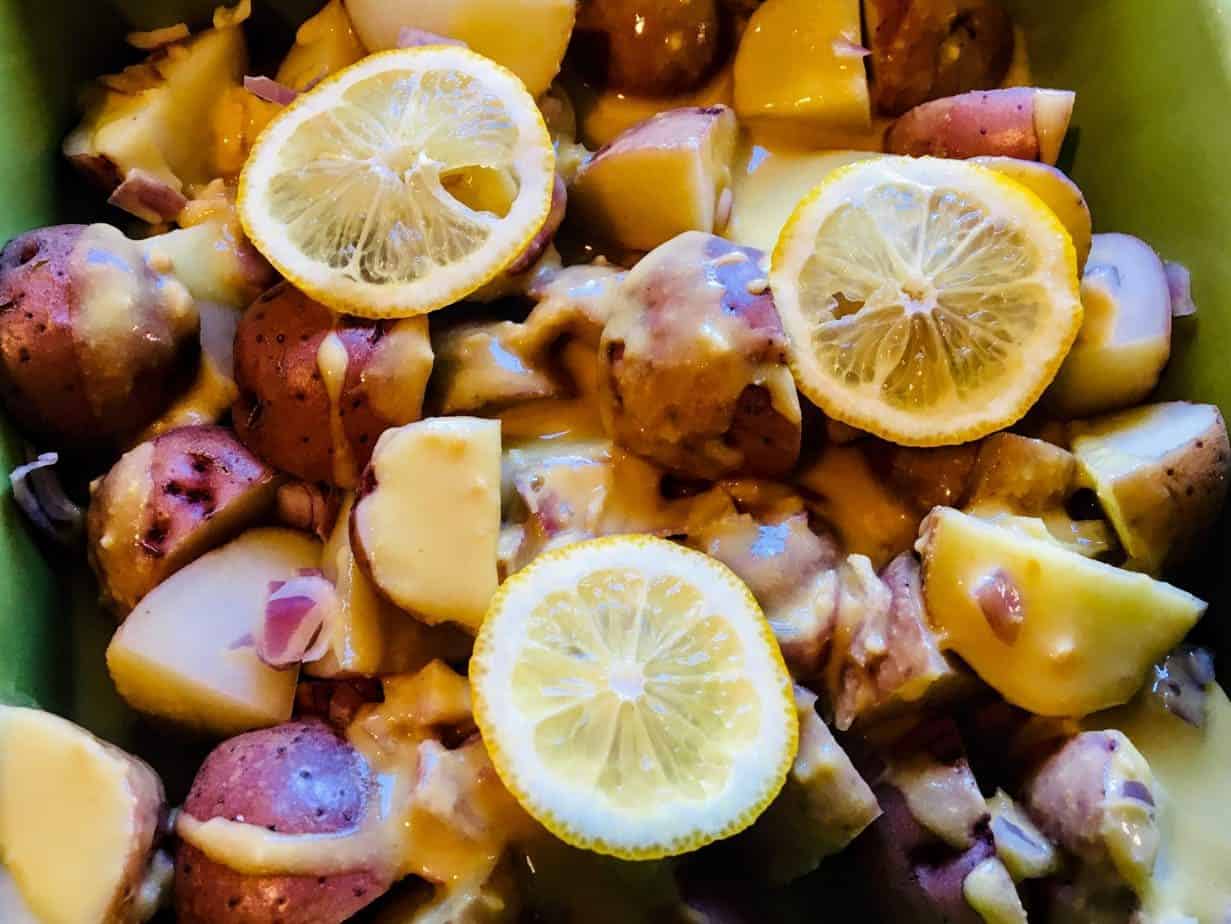
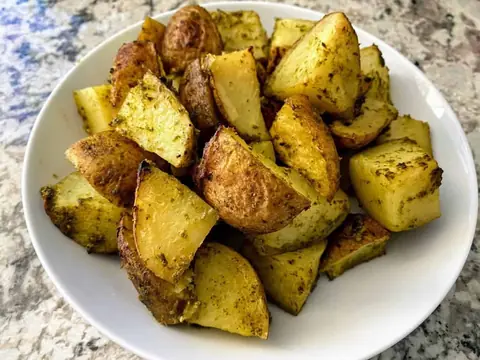
So, if I don't say so myself, these potatoes are a game changer! In fact, they are the perfect marriage between sweet and savory without any oil or added fat.
Why Roast Potatoes in Miso
In my opinion, miso is such a wonderful ingredient simply because it adds immediate flavor to almost anything I make. Often, I use miso in sauces as well, like dressing, but I figured why not roast my potatoes in it as well.
As a fermented food, miso provides beneficial gut bacteria that help us to stay healthy, vibrant and happy; good gut health is known to be linked to our overall mental and physical wellness.
Types of Miso
In fact, there are different varieties of miso: (Jo Win, Registered Nurse)
White Miso (Shiro)
White Miso (Shiro) is made from soybeans and rice and fermented for no longer than two months. Shiro (means “white” in Japanese) is light in color and sweet to mildly salty. Shiro, for example, is very versatile and provides a bit of oomph to salad dressings or sautéed vegetables.
Yellow Miso (Shinsu)
Another mild type that is fermented for slightly longer than white miso is yellow miso (Shinsu). Yellow miso is adaptable in a wide range of recipes, as well.
Red Miso (Aka)
If a recipe calls for dark miso, you’ll want to use an aka or red miso. Russet in color, this type is made from a higher proportion of soybeans, is fermented for up to three years, and is saltier and deeper in flavor.
Its full flavor is best used in hearty dishes like stews and tomato sauces. Use with caution, as its flavor can overpower other ingredients.
Barley Miso (Mugi)
Barley Miso (Mugi), from barley and soybeans, usually has a longer fermentation process than most white miso. It has a strong barley aroma but is still mild and slightly sweet in flavor.




1 comment